


Executive Summary
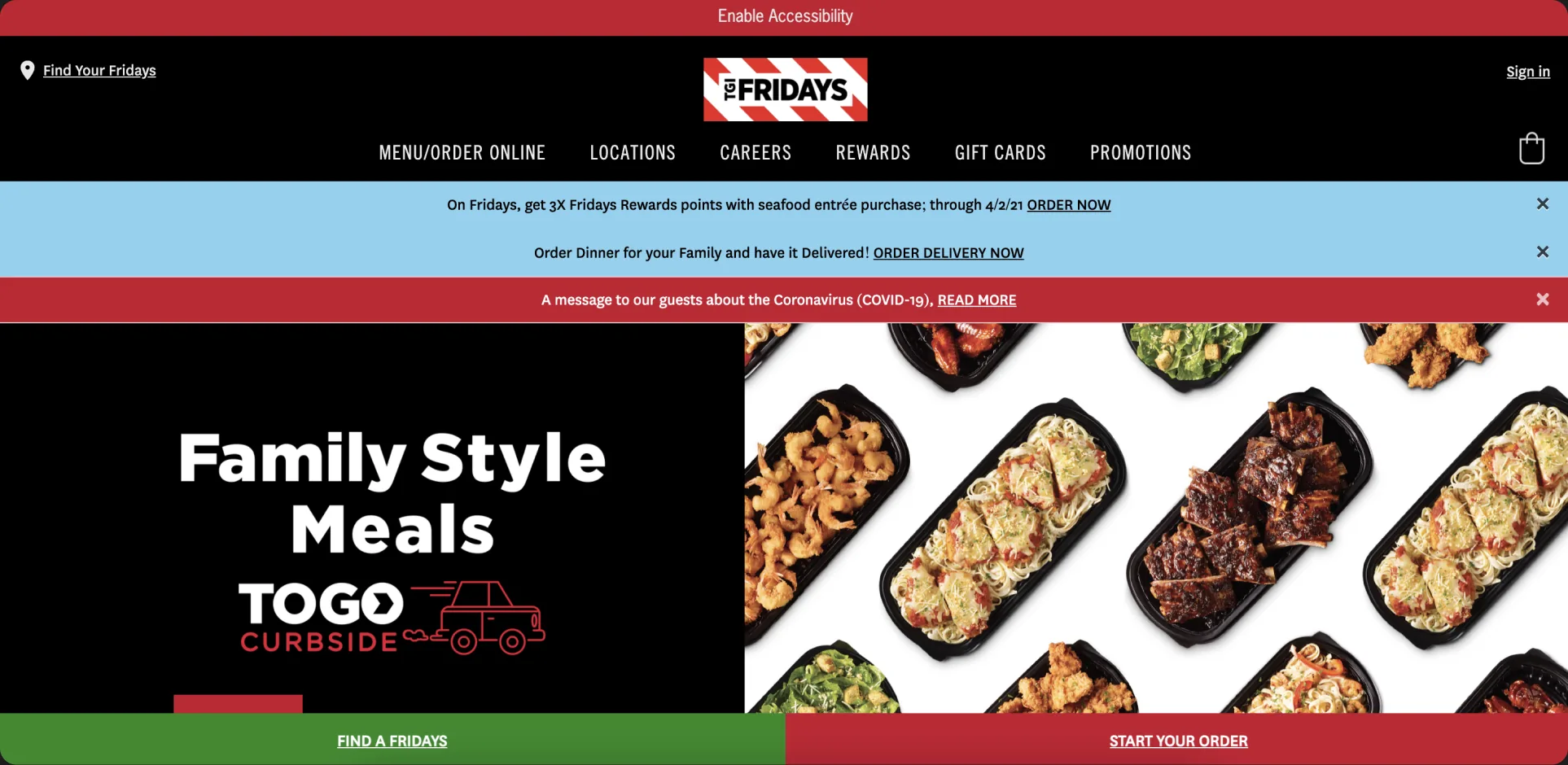
TGI Fridays sought to evolve its digital ecosystem following the acquisition of a portion of C3 Company, with the objective of integrating multiple ghost kitchen concepts and virtual brands into its transactional platform. The company needed to transform a traditional digital presence into a growth engine capable of supporting diverse business models under a cohesive brand identity.
The core challenge lay in the rigidity of the existing technical infrastructure and internal processes, which limited the ability to respond to market demands for online ordering. The complexity of the project required not only the technical integration of brands with distinct visual identities but also a deep transition toward agile product development methodologies to ensure scalability and organizational agility.
Onetree executed a data-driven, user-centric approach, prioritizing the redesign of corporate and ordering platforms. The work included an exhaustive UX analysis and a comprehensive accessibility audit under WCAG standards, ensuring that menu navigation and the checkout process were inclusive and free of operational friction.
The collaboration was structured through a multidisciplinary team model working across market, user, and product dimensions. As a result, the backend architecture was modernized to host virtual kitchens, and technical enhancements such as semantic HTML and keyboard navigation were implemented. This effort consolidated a flexible, future-ready platform, improving the customer experience at scale.

The Challenge: Integrating virtual brands into a legacy digital ecosystem
TGI Fridays faced the necessity of transitioning from a static digital presence to a multi-brand business model following the acquisition of assets from C3 Company. The organization had to assimilate ghost kitchen concepts into a technical infrastructure that was not originally designed for the coexistence of divergent visual and operational identities, creating significant pressure on existing systems.
This transformation process encountered critical constraints across three levels:
- Organizational Constraint: The requirement to move away from traditional development cycles toward an agile product development model to respond to rapid market fluctuations.
- Technical Constraint: A legacy architecture characterized by data silos that prevented a fluid information flow between inventory management and online ordering platforms.
- Scale Constraint: The demand to provide a uniform and inclusive user experience for a massive audience, meeting global digital accessibility standards without compromising performance.
The project objective was defined by the need to integrate multiple virtual brands while strictly maintaining the unique identity and integrity of each concept. This required eliminating complex friction points identified within the menu navigation and checkout processes to improve conversion. Furthermore, the initiative demanded a complete modernization of backend systems to ensure the scalability of delivery and pickup operations while achieving full WCAG compliance for a barrier-free guest experience.

The Solution: Multi-dimensional digital transformation and accessibility implementation
To address the complexity of TGI Fridays, Onetree implemented a transformation strategy divided into three critical dimensions: Market, User, and Product. This approach ensured that technical decisions not only resolved technological debt but remained strictly aligned with the brand’s commercial expansion goals.
The execution focused on the following technical and methodological pillars:
User Experience and Testing.
The team conducted an in-depth UX analysis, utilizing heuristic evaluations and real-world user testing to identify friction within the conversion funnel. By observing specific user behaviors across the ordering platforms, the team redesigned the navigation flow to significantly reduce cognitive load during the selection of products from virtual brands.
Technical Accessibility Framework.
A comprehensive accessibility audit was executed under WCAG standards, combining automated scanning tools with manual navigation testing. The technical intervention included the implementation of semantic HTML and the advanced use of ARIA labels to ensure screen readers correctly interpreted dynamic content, guaranteeing a barrier-free experience for all users.
Architecture and Agile Delivery.
To support the Market Dimension, the backend architecture was modernized to allow the coexistence of multiple menus and business rules from ghost kitchens within a single transactional engine. The adoption of agile methodologies was fundamental to enable continuous deployments and a rapid response to the operational needs of the business, ensuring the digital product remained scalable and flexible for future launches.
Results & Impact: Inclusive digital ecosystem and multi-brand scalability
The collaboration with Onetree transformed TGI Fridays’ digital infrastructure into a resilient, future-ready platform. Beyond the technical deployment, the project established a new standard for how the brand manages digital inclusion and rapid market expansion within the competitive food and beverage landscape.
The observable outcomes of the execution include:
- Optimized Conversion Pathways
By streamlining navigation logic and reducing cognitive load, the platform minimized drop-off points in the ordering funnel, particularly for users interacting with multiple virtual menus simultaneously. - Universal User Access
The transition to WCAG compliance through advanced semantic structures ensured that digital services are now fully accessible to users relying on assistive technologies, effectively expanding the brand’s total addressable market. - Operational Elasticity
The new backend architecture functions as a plug-and-play system for ghost kitchens, allowing the business to launch or pivot virtual brand concepts with minimal development overhead and consistent performance. - Deployment Velocity
Transitioning to agile product development significantly shortened the cycle between market feedback and feature release, enabling a more responsive and competitive digital operation.
The final validation confirms that TGI Fridays now possesses a unified digital ecosystem where technical accessibility and multi-brand complexity coexist without friction. This transformation has successfully mitigated the risks associated with legacy architecture, providing the brand with the architectural foundation necessary to sustain long-term growth and continuous innovation in the virtual dining space.