


Executive Summary
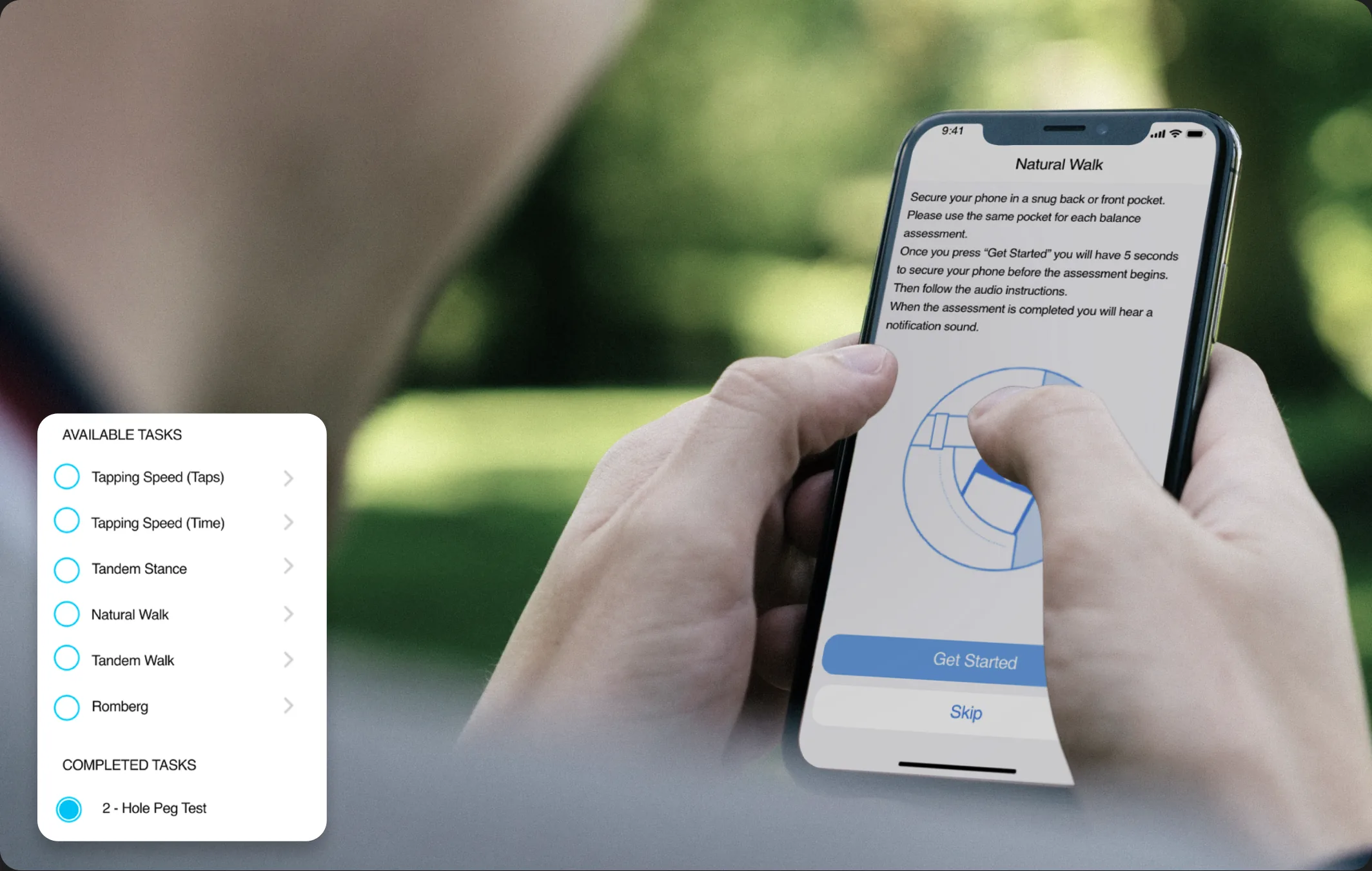
We collaborated with the Clinical Pharmacy Department at the University of Michigan to support the evolution of a mobile healthcare application designed to detect and monitor chemotherapy-induced peripheral neuropathy in cancer-treated patients. The app analyzes gait, balance, and finger coordination through structured assessments, enabling continuous patient monitoring throughout treatment.
Our work focused on the design and development of version 2 of an iOS application, as well as its integration with the Medable platform on the backend. By leveraging Apple ResearchKit, we built on validated clinical assessment frameworks while addressing its limitations to adapt workflows, interactions, and accessibility requirements. Through an iterative and collaborative design process, we translated complex clinical needs into an accessible, user-friendly experience tailored to patients undergoing chemotherapy.

The Challenge: Balancing clinical requirements, accessibility, and technical constraints under tight timelines
The Clinical Pharmacy Department at the University of Michigan was developing a mobile application to detect and monitor chemotherapy-induced peripheral neuropathy in cancer-treated patients. The challenge was to evolve the product while ensuring it remained extremely friendly, accessible, and easy to use for patients undergoing treatment.
A key constraint was the reliance on Apple ResearchKit for clinical assessments. While ResearchKit provided validated frameworks for data collection, it also imposed limitations on customization, predefined flows, and interaction patterns that did not fully align with the project’s requirements. Adapting these constraints without compromising usability, accessibility, or clinical accuracy required careful design decisions.
At the same time, the project operated within a tight timeline, demanding rapid alignment across stakeholders, continuous validation of early flows, and parallel work across UX design, UI definition, and requirement documentation. We needed to move quickly while ensuring that both the patient experience and the development foundation were solid enough to support future iterations.
The Solution: Designing an accessible and adaptable clinical monitoring experience
We addressed the project through a structured discovery and iterative design process, focused on deeply understanding the clinical context, the technical constraints, and the needs of cancer-treated patients. Early on, we explored the problem space, gathered insights from stakeholders, and aligned on a clear definition of the problem to ensure a solid foundation for the product’s evolution.
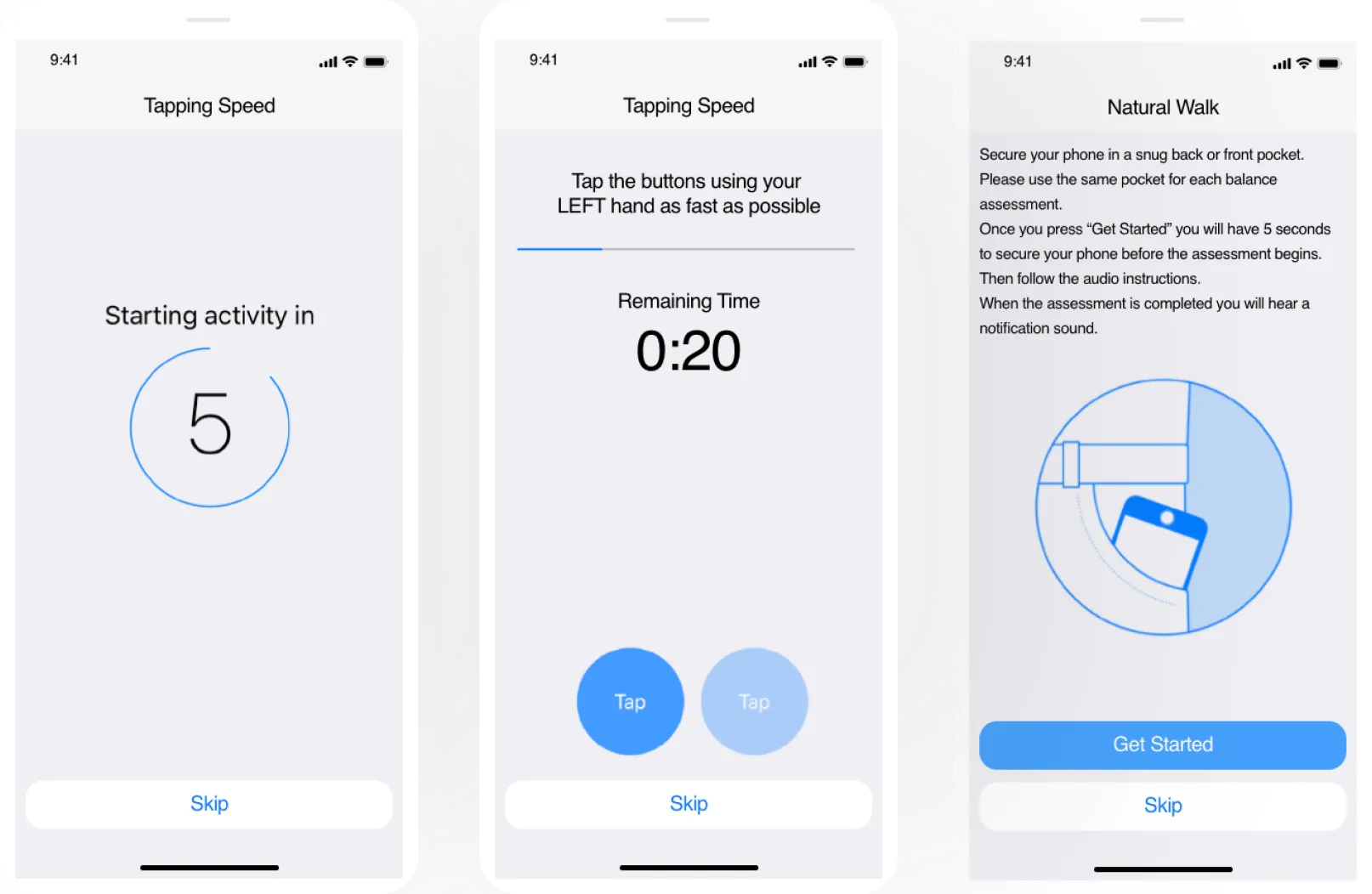
To navigate the limitations imposed by Apple ResearchKit, we worked closely with the client to adapt predefined assessment flows into clear, usable, and accessible user journeys. We translated clinical requirements into well-defined wireframes and interaction flows, validating them continuously with stakeholders to ensure alignment across design and development.
Working in agile sprints, we progressively transformed validated flows into UI, built an iOS UI kit, and developed interactive prototypes for testing. This parallel approach allowed us to refine usability and accessibility while documenting functional requirements, ensuring that the solution remained technically feasible and clinically accurate within a tight timeline.
Results & Impact: A trusted, patient-centered monitoring solution
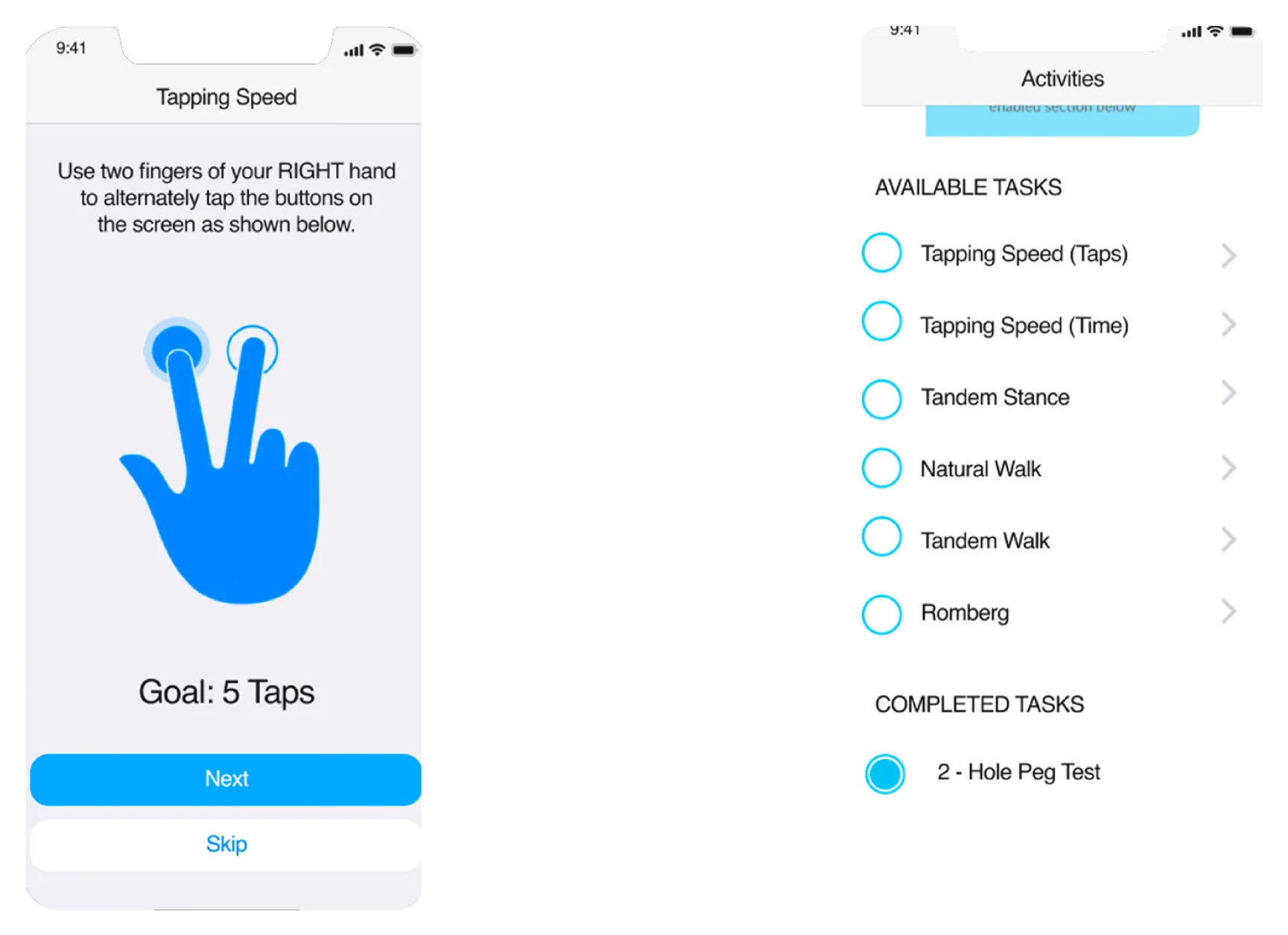
The project resulted in an accessible iOS application capable of reliably supporting the monitoring of chemotherapy-induced peripheral neuropathy throughout treatment. The final solution successfully balanced clinical accuracy, usability, and accessibility, despite the technical constraints of the underlying frameworks.
Continuous collaboration and iterative validation enabled the delivery of a product that met the client’s expectations and supported real-world clinical use. Beyond the application itself, the engagement strengthened the collaboration and positioned Onetree as a trusted long-term partner, expanding our role from execution to contributing to product strategy and decision-making.
The outcome reinforced a shared commitment to leveraging healthcare technology to improve patient experience and quality of life, delivering the expected results for both patients and clinical stakeholders.